Before a haunted-attraction guest ever sees the monster, they can tell whether it belongs in the room. A convincing creature has weight, texture, awkward edges, and a presence that changes the air around it. That is the lasting lesson of practical-effects horror: fear gets stronger when the audience believes it is standing beside something real.
For haunted houses, that is not nostalgia for latex and fog. It is a useful production philosophy. The practical-effects classics understood that a scare is not only a surprise; it is a physical event. Their methods still offer a playbook for haunts that want guests to remember more than the jump.
Build the object, not just the reveal
The most memorable practical creature work starts with form. In Alien, the design feels like a living industrial object: glossy, skeletal, strange, and somehow heavy. In The Thing, the horror comes from transformation that appears to occupy real space. The audience can study it, and that makes it worse.
Haunts can borrow that thinking by designing focal props and creatures for the moments before the actor moves. A silhouette at the end of a corridor, a medical rig that looks used rather than decorated, or a figure that seems to have a history can establish dread long before a performer delivers the scare. If the room is believable when nobody moves, the reveal has something solid to land on.
Texture is storytelling
Practical horror rewards close attention. Damp walls, worn fabric, chipped paint, greasy metal, and imperfect skin all tell the eye that a place has been occupied. The best film effects rarely look factory-fresh; they look touched, weathered, and inconveniently alive.
That is a powerful note for scenic teams. Instead of treating texture as an afterthought, use it to answer a few simple questions: Who works here? What happened here? What has been left behind? A stitched costume, a stained workbench, or a row of jars with inconsistent labels can do more emotional work than a larger prop with no context. Guests read those details at walking speed, even if they cannot explain why the space feels convincing.
Let performers interact with the world
One reason physical effects age so well is that actors can react to them. They can lean on them, drag them, struggle with them, or simply look afraid of them. The object and performer share the same light and the same frame.
In a haunt, a monster should feel connected to its environment rather than dropped into it. Give actors doors that stick, equipment they can operate, curtains they can push through, or props that create sound and resistance. A character who must work within the space feels more real than one who is waiting at a mark for a cue. The interaction does not have to be elaborate; it just has to be specific.
Use movement with restraint
Practical-effects movies know that the audience needs time to look. A creature that is shown too quickly becomes a flash of information. A creature that is held in the frame long enough to be understood becomes a problem the viewer has to live with.
Haunt pacing works the same way. Not every scare should fire the instant guests cross a threshold. Let them notice the shape first. Let a sound pull attention in the wrong direction. Let the character perform a small, unsettling action before the big beat. That extra second creates anticipation—and anticipation is often more frightening than the scream itself.
Imperfection makes it feel alive
Practical effects carry quirks: a seam that catches light, a jaw that moves a little oddly, a fluid effect that is almost too tangible. Those flaws can make the image more disturbing because they suggest an object with physical limits.
Haunted attractions do not need immaculate surfaces to feel premium. They need intentional ones. A crooked mask, an asymmetrical creature, or a prop that behaves slightly unpredictably can be far more memorable than something polished into generic perfection. The goal is not sloppiness. It is character.
The takeaway: make fear occupy space
Digital tools, projections, and lighting tricks all have a place in modern haunts. But practical-effects horror offers a reminder that the strongest illusion often begins with a real thing in a real room. Give guests something they can see from the corner of an eye, hear scrape across the floor, and feel looming just beyond reach.
When a haunt treats its sets, costumes, creatures, and performers as parts of one physical world, it earns the kind of fear that follows guests out to the parking lot. That is the magic practical-effects horror has always understood: the monster is scarier when it seems like it could still be there after the lights come up.
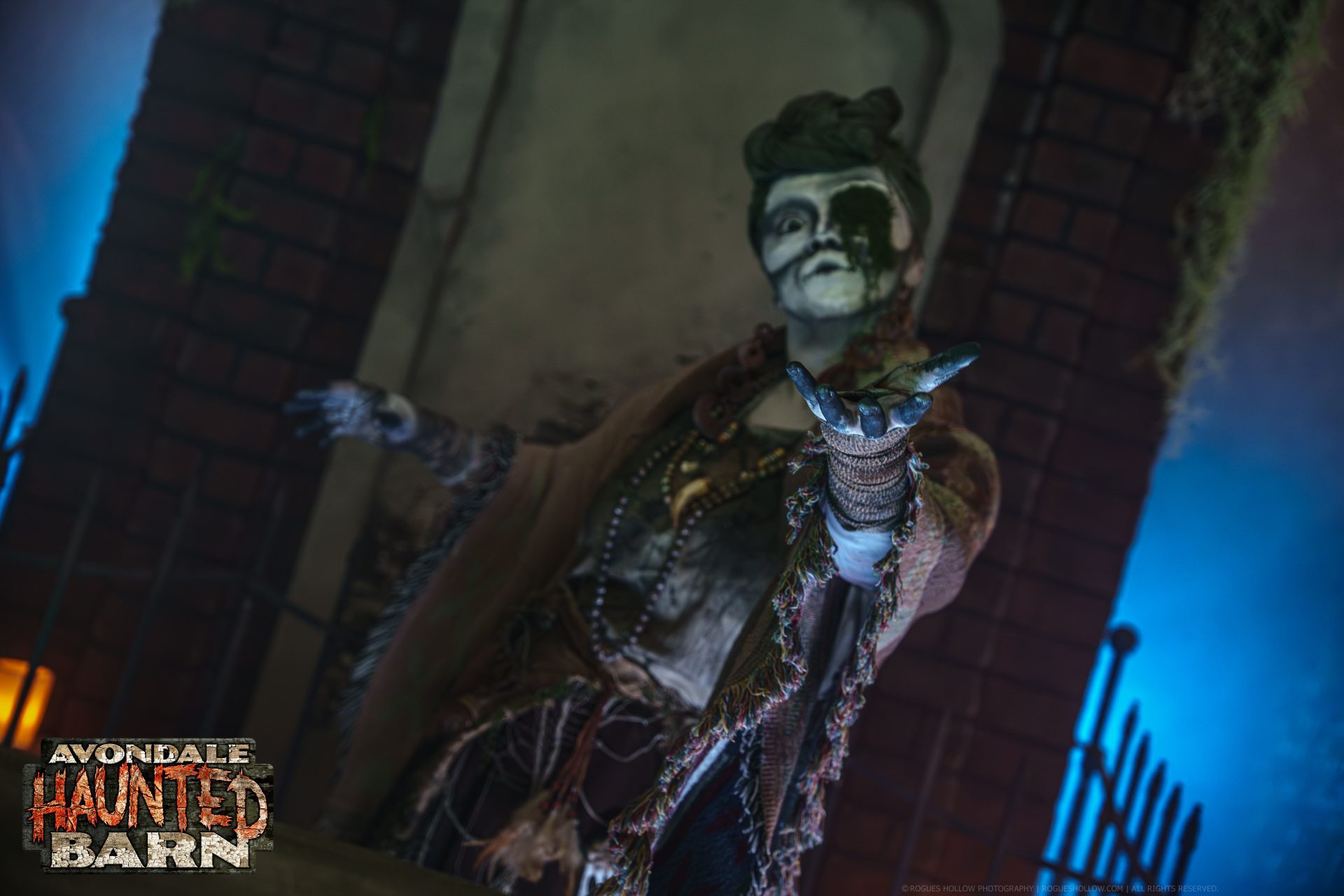
Featured image: Avondale Haunted Barn, photographed by Christopher Brielmaier / Rogues Hollow Photography.