
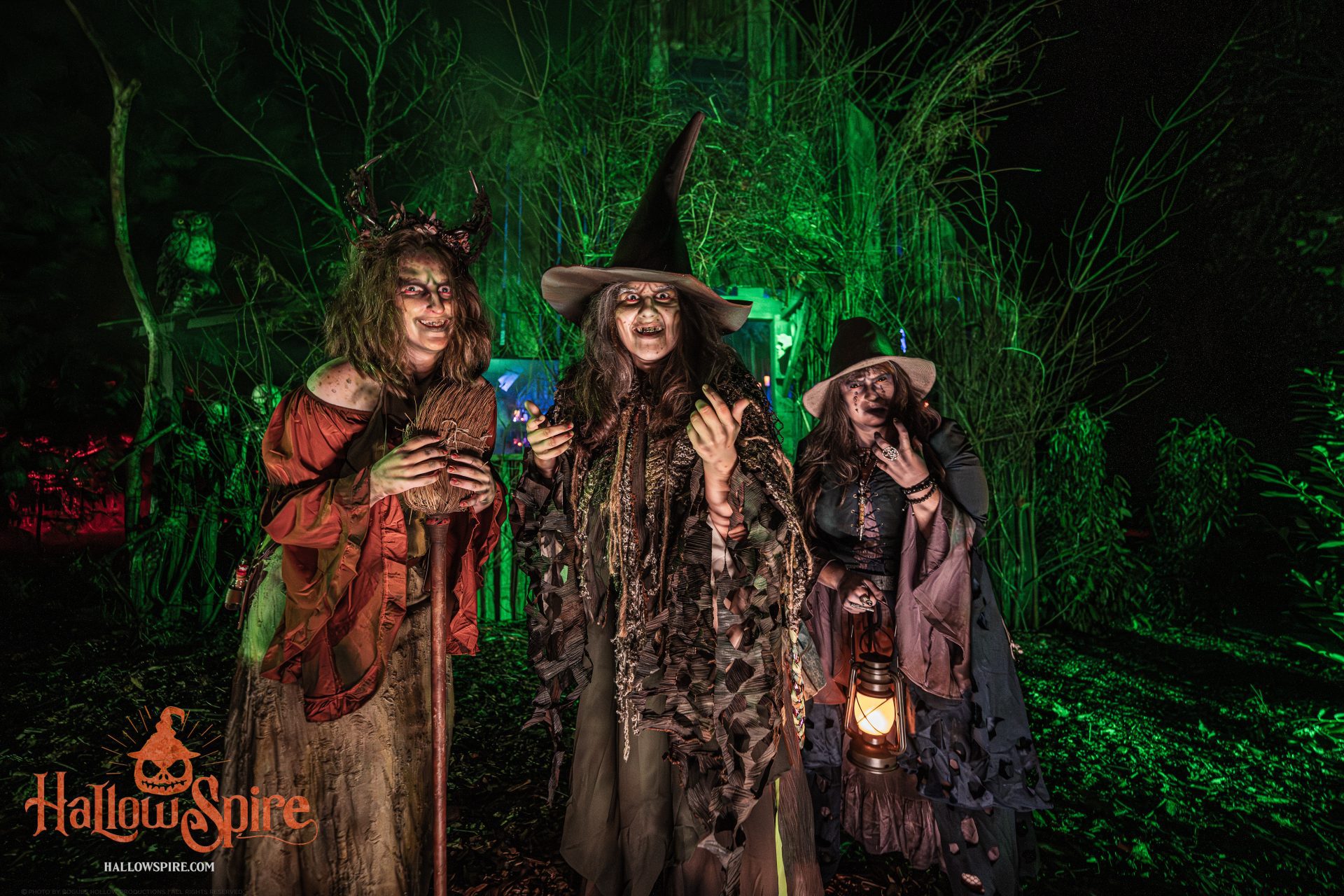
Every October, ordinary neighborhoods agree to become a little strange. Porches glow orange after dark. Front doors open to costumed strangers. Stories about ghosts, monsters, and things in the woods move from the margins to the center of the calendar.
Halloween is often treated as a single night of candy and costumes, but its staying power comes from something more enduring: it gives people permission to rehearse fear together. The holiday turns the things that unsettle us into a shared game, complete with rules, rituals, and a safe way home.
Costumes turn the familiar into a character
Putting on a costume changes more than an outfit. For a few hours, a person can become a creature, a villain, a survivor, or something impossible to name. That transformation creates distance from everyday identity and makes play feel bigger than life.
Haunted attractions work from the same instinct. A great costume is not merely something an actor wears; it is a signal that guests have crossed into another world. The moment a familiar face disappears behind a mask, makeup, or silhouette, the audience is invited to suspend disbelief. Costuming gives both performer and guest a little freedom to lean into the story.
The porch light is an invitation
A lit porch on Halloween carries a simple message: come closer. It is a small act of hospitality with a shadowy edge. Visitors know there may be a bowl of candy, a hand reaching from behind a prop, or a friendly scare waiting near the door.
That balance between welcome and uncertainty is one of the most useful lessons Halloween offers haunt designers. Guests need to feel called into an experience before they can enjoy being frightened by it. An entry façade, queue line, music cue, or glowing sign can do the work of the porch light: it establishes that the world ahead is intentional, playful, and open to them.
Trick-or-treating makes suspense communal
Trick-or-treating is built around a repeating question: what is behind the next door? Children travel in groups, compare costumes, dare one another forward, and collect proof of each encounter in their candy bags. The stakes are tiny, but the rhythm is powerful. Anticipation arrives before every doorstep.
That same rhythm drives a memorable haunted house. A hallway should promise something without explaining it. A sound should encourage guests to move toward the next scene. A group of friends should have room to react together, then carry that energy into the next beat. The best scares are rarely isolated events; they are part of a rising pattern of curiosity, hesitation, laughter, and release.
Haunted stories give shape to the unknown
From campfire tales to local legends, Halloween has always made room for stories that linger after the lights go out. A haunted story takes an unknown threat and gives it a place, a voice, and a set of rules. Even when the story is frightening, those details make it easier to approach.
For attractions, this is why a cohesive narrative matters. A room can be visually impressive, but guests remember why it existed in the world they entered. A decaying manor, an abandoned carnival, or a cursed laboratory becomes more compelling when its characters and choices leave traces. Story turns a collection of scenes into a place people feel they have visited.
Voluntary fear is a form of control
The core appeal of Halloween is voluntary fear. People choose the dark path, the scary movie, the costume that unsettles their friends, or the house with the fog machine. They know they can step back, laugh, or return to the light. That control transforms anxiety into excitement.
Haunted attractions create their strongest emotional connection when they respect that choice. Clear expectations, thoughtful pacing, and an environment that feels managed allow guests to surrender to the experience. When fear is framed by care, it becomes a thrill guests want to share rather than merely endure.
Why the rituals endure
Halloween traditions survive because they make fear social, creative, and temporary. They let communities test the edge of the unknown without losing the comfort of familiar streets and familiar people. A costume, a porch light, a candy bag, and a good ghost story are all small invitations to imagine a world just beyond the ordinary.
That is also the promise at the heart of the haunt industry. The goal is not simply to startle someone in the dark. It is to build a place where guests can choose to be afraid together, then leave talking about what they saw. Halloween gives that instinct a season. Great haunted attractions give it a destination.
Featured image: Hallowspire, photographed by Christopher Brielmaier / Rogues Hollow Photography.